
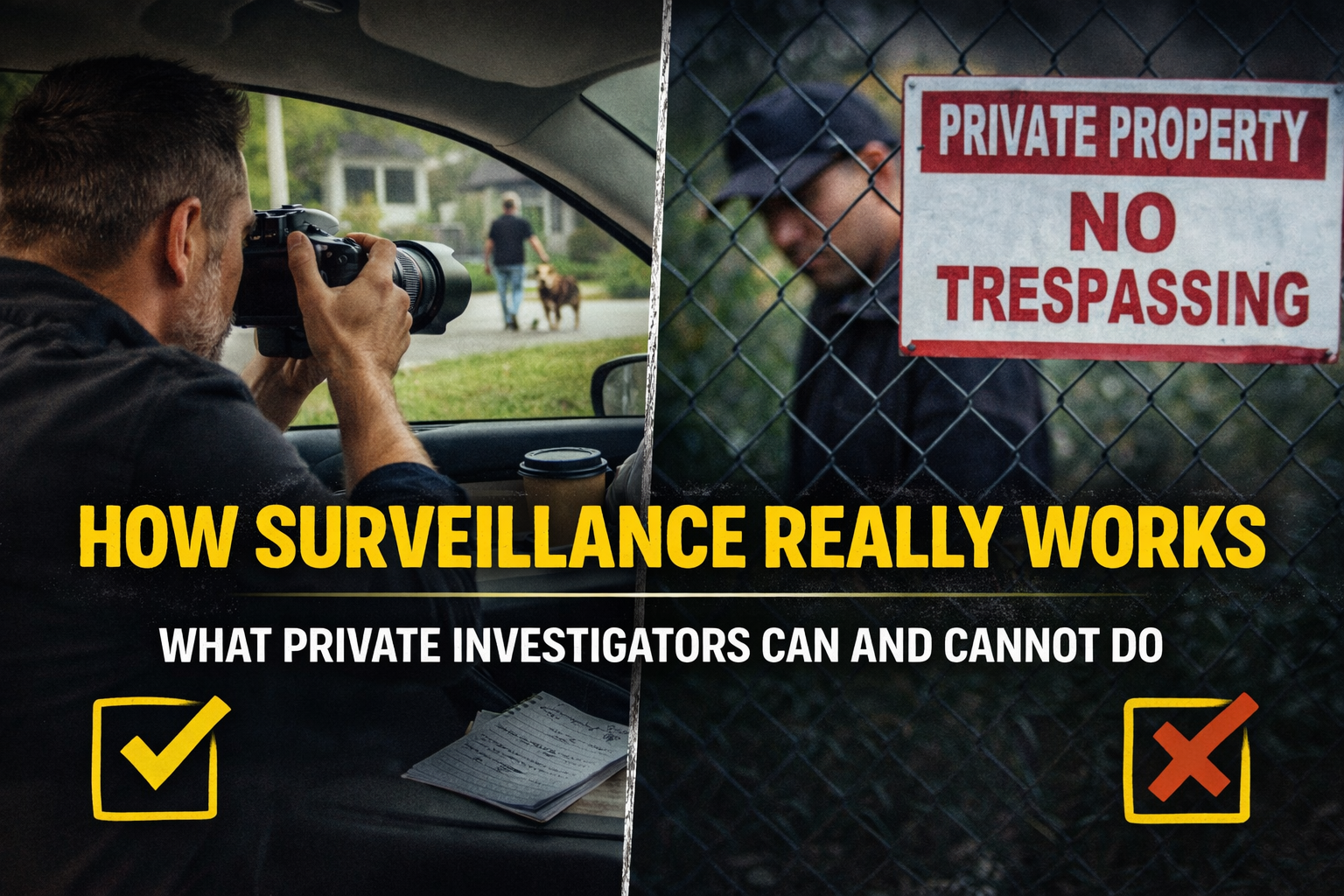
How Surveillance Really Works
Surveillance is one of the most requested services in private investigations, yet it is also one of the most misunderstood. Television often portrays surveillance as dramatic, fast-moving, and filled with constant breakthroughs. In reality, professional surveillance is methodical, carefully planned, and governed by strict legal boundaries.
Understanding how surveillance actually works helps clients know what to expect and ensures investigations remain effective and lawful.
What Private Investigators CAN Do
Professional investigators are legally allowed to observe and document activity that occurs in public view. This may include:
- Monitoring movements in publicly visible locations
- Photographing or recording activity observable from public vantage points
- Documenting timelines, patterns, and behaviors
- Following a subject on public roads
- Conducting stationary observation from lawful positions
Surveillance focuses on documenting facts rather than confronting individuals. The primary goal is accurate observation supported by verifiable evidence.
What Private Investigators CANNOT Do
There are also important legal limitations that govern surveillance work. Professional investigators cannot:
- Enter private property without permission
- Install tracking devices without lawful authorization
- Intercept private communications
- Trespass or disguise themselves as law enforcement
- Harass or intimidate a subject
Operating outside legal boundaries risks invalidating evidence and exposing both investigator and client to liability. Ethical investigators always prioritize lawful procedures.
Why Surveillance Often Takes Time
Clients sometimes expect immediate results. In practice, surveillance frequently involves extended observation periods and careful planning. Success often depends on:
- Selecting proper observation locations
- Understanding subject routines
- Maintaining discretion to avoid detection
- Documenting activity consistently
Even when nothing appears to happen, documenting inactivity can still be valuable evidence in certain cases.
The Human Side of Surveillance Work
Surveillance assignments often involve sensitive personal situations such as custody matters, insurance claims, or civil disputes. Because outcomes may significantly affect families or legal proceedings, investigators must balance technical skill with professionalism and discretion.
Careful documentation, patience, and ethical judgment are essential parts of the process.
Why Understanding Surveillance Matters
Knowing what investigators can and cannot legally do helps clients set realistic expectations and ensures investigative work remains both effective and admissible if needed in legal proceedings.
After more than two decades working in the investigative field, I documented many real surveillance experiences and lessons learned in my memoir, Behind the Camera: Memoirs of a Private Investigator, which shares firsthand stories from actual cases and the realities behind professional investigative work.
If you’d like to learn more about what happens behind real investigations, you can find the book here:
👉 https://www.amazon.com/dp/B0GNLTR42D
Matthew Schultz is the founder of MS Recoveries & Investigations and has provided investigative services nationwide since 2003.