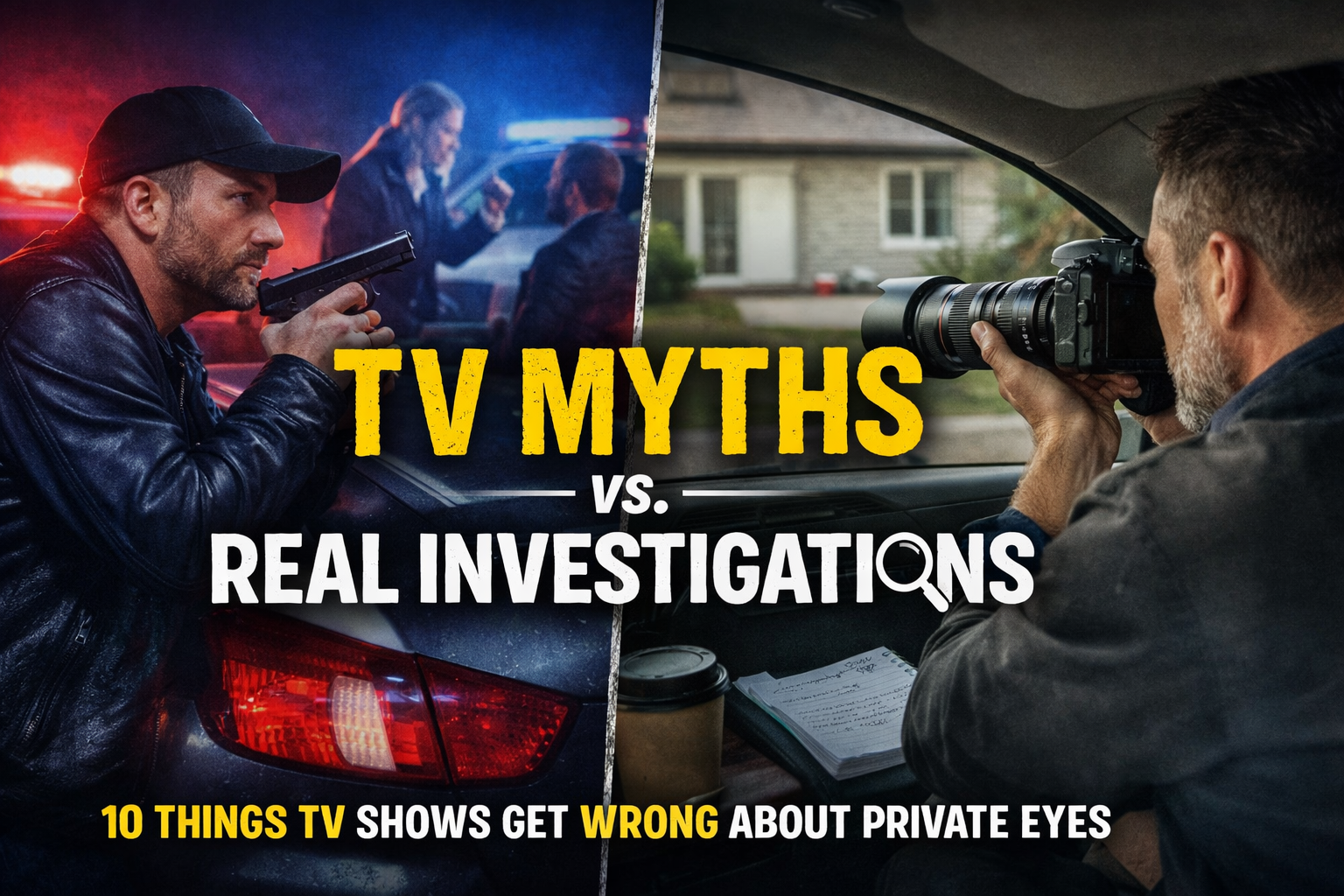
10 Things Television Gets Wrong About Private Investigators
Private investigators appear frequently in television dramas and crime shows. While these portrayals make for entertaining stories, they rarely reflect how professional investigative work actually operates in the real world. After more than two decades working in the field, I’ve seen how far reality differs from what viewers expect.
Here are ten of the most common misconceptions.
1. Cases Are Not Solved in a Single Day
Television investigations often wrap up within an hour-long episode. Real investigations can take days, weeks, or sometimes longer. Gathering reliable evidence requires patience, planning, and documentation.
2. Surveillance Is Mostly Waiting, Not Action
Shows often portray surveillance as constant pursuit and dramatic movement. In reality, surveillance frequently involves extended observation periods, careful positioning, and detailed note-taking. Success often depends on preparation rather than dramatic events.
3. Investigators Must Follow Strict Legal Boundaries
Television characters frequently break rules to obtain information. Professional investigators cannot do this. Evidence must be gathered lawfully or it risks becoming unusable. Legal compliance is a core part of the job.
4. Technology Does Not Instantly Reveal Everything
TV investigations often rely on instant database access or immediate digital tracking results. Real investigative research involves verifying information across multiple sources, confirming accuracy, and documenting findings properly.
5. Interviews Are Rarely Dramatic Confrontations
Television often shows aggressive interrogations leading to immediate confessions. In reality, professional interviews are structured, controlled, and focused on gathering verifiable information rather than forcing admissions.
6. Investigators Do Not Constantly Carry Out High-Speed Pursuits
Car chases and dramatic pursuits make good television, but they are not standard investigative practice. Maintaining discretion is usually far more important than direct confrontation.
7. Most Work Happens Behind the Scenes
Television focuses on the visible moments of an investigation. Much of the real work happens in preparation, research, documentation, and report writing — tasks that are essential but less dramatic.
8. Investigators Often Handle Sensitive Personal Situations
Many real investigations involve family matters, custody disputes, insurance claims, or civil cases. These situations require professionalism, discretion, and attention to detail rather than dramatic tactics.
9. Evidence Matters More Than Suspicion
Television characters often act on instinct alone. Real investigations rely on documented evidence, verified timelines, and factual reporting. Conclusions must be supported, not assumed.
10. Real Investigations Are About Accuracy, Not Entertainment
Television is designed to tell compelling stories. Professional investigative work is designed to uncover facts that can stand up in legal, insurance, or personal decision-making contexts. The goal is reliability, not drama.
Why Understanding the Reality Matters
When people understand how investigations truly work, they are better prepared to make informed decisions when hiring professional investigative services or evaluating information gathered during a case.
After spending more than two decades in the investigative field, I documented many of these real-world experiences in my memoir, Behind the Camera: Memoirs of a Private Investigator. The book shares firsthand stories, lessons from actual cases, and an honest look into the realities of investigative work.
If you’re interested in learning more about what happens behind real investigations, you can find the book here:
👉 https://www.amazon.com/dp/B0GNLTR42D
Matthew Schultz is the founder of MS Recoveries & Investigations and has provided investigative services nationwide since 2003.